Bureau of Energy Efficiency Drawing: Guide & Examples 2025
Ever searched “Bureau of Energy Efficiency drawing” and ended up completely confused? You’re not alone. In India, the same phrase can mean two totally different worlds — a bright, colourful poster made by a Class 5 kid… or a serious building blueprint that can get your construction plan rejected if it’s even slightly wrong.
That’s the wild part — both are officially linked to the Bureau of Energy Efficiency. So whether you’re a student hoping to win ₹1 lakh in the 2025 Painting Competition, or an architect trying to make your building save 40% electricity, this guide breaks everything down in the simplest, most useful way.
By the end, you’ll know exactly which “BEE drawing” YOU need — the one made with crayons, or the one made with CAD.
Let’s clear the confusion once and for all.
Key Takeaways
- Bureau of Energy Efficiency drawing is either fun school posters OR serious building plans – most people mix them up.
- 2025 painting competition is now fully online with bigger prizes.
- Proper building drawings can cut your electricity bill by almost half and save you from a ₹1 lakh fine.
What Is a Bureau of Energy Efficiency Drawing?
Let me clear the confusion right at the start. When Indians search for “Bureau of Energy Efficiency drawing”, they usually mean one of two completely different things:
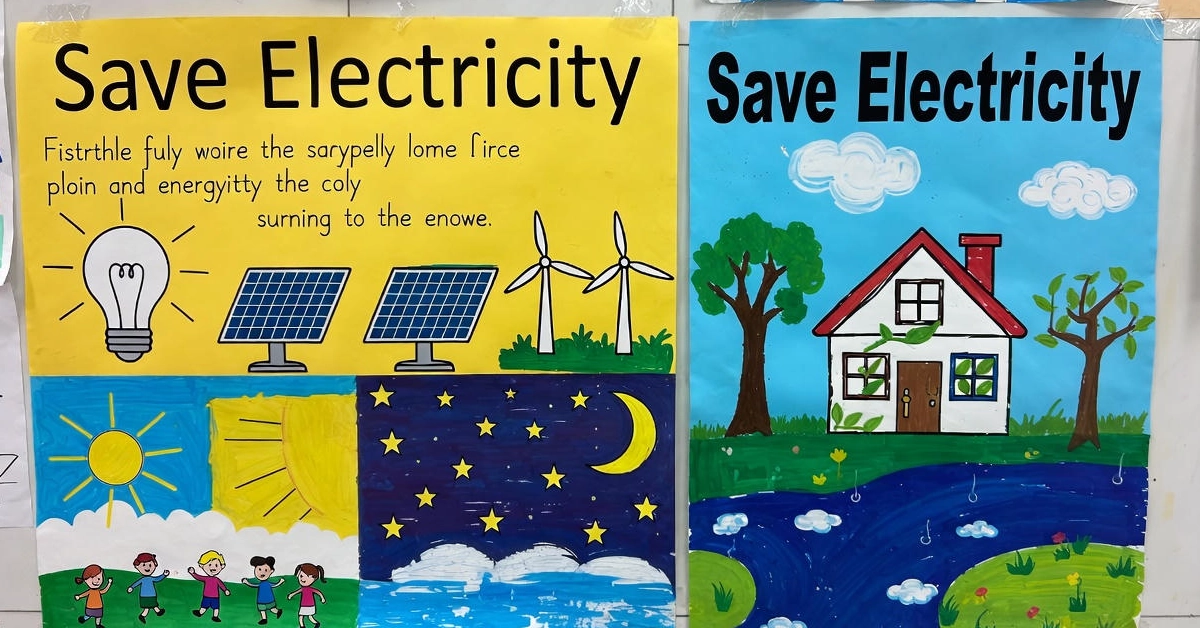
- Colourful posters and paintings made by school kids to spread the message “Save Electricity”.
- Technical blueprints and architecture plans that follow India’s Energy Conservation Building Code (ECBC) rules.
Both are officially connected to the Bureau of Energy Efficiency (BEE), Ministry of Power, so the same phrase “Bureau of Energy Efficiency drawing” is used for both. Crazy, right?
Think of it like this: One is the drawing your 10-year-old niece makes for the Children’s Day competition. The other is the drawing that an architect submits to get building permission without getting rejected. This guide covers both sides of the Bureau of Energy Efficiency drawing properly for the first time in one place.
Type 1 – The Fun One: BEE Painting Competition Drawings
Every year since 2005, BEE and Ministry of Power organise the National Painting Competition. Lakhs of school kids participate. In 2025 it’s bigger than ever because everything is online now.
Official 2025 Theme: “Energy Conservation – A Way of Life”
Who can join?
- Group A: Class 4, 5, 6
- Group B: Class 7, 8, 9
- First prize at national level: ₹1 lakh cash + certificate signed by Power Minister!
New rules for 2025:
- Draw on A4 or A3 paper → scan/photo → upload on beeindia.gov.in before 15 December 2025
- File size maximum 5 MB, JPG or PDF only
- No postal entries anymore – 100% digital
These Bureau of Energy Efficiency drawing activities help kids understand energy saving through art. It’s a simple way to make the topic stick.
10 Easy Energy-Saving Drawing Ideas That Win Prizes (2025)
Here are ideas that judges loved in the last few years for your Bureau of Energy Efficiency drawing:
- A family switching off lights and fans when not in the room – big bold switch with “OFF = SAVE” written
- The house roof is full of solar panels, and a happy sun is smiling
- Fridge, AC, TV showing 5-star BEE labels with rupees flying into a piggy bank
- A child riding an electric scooter while petrol pump looks sad
- A tree made of LED bulbs instead of leaves
- Before-and-after picture: left side dark village, right side bright with windmills
- Water tap + electric geyser together with the message “Wasted hot water = wasted electricity.”
- A superhero called “Energy Saver” is turning off standby mode on gadgets
- Indian map glowing with green energy-efficient street lights
- Kids planting trees and writing “Shade = Natural AC.”
Pro tip from last year’s winner: Use bright poster colours, a thick black outline, and write a short slogan in big letters. Judges love clarity in these Bureau of Energy Efficiency drawing entries.
Type 2 – The Serious One: Technical BEE (ECBC) Drawings for Buildings
Since the 2022 amendment, every new commercial building, mall, hospital, hotel, or big apartment (connected load >100 kW) has to follow the Energy Conservation Building Code. That means the architect has to submit special energy-efficiency drawings along with normal plans. These are core Bureau of Energy Efficiency drawing documents.
These Bureau of Energy Efficiency drawings prove your building will not waste electricity on:
- Too much heat coming from the walls/windows
- Over-sized air-conditioners
- Bad lighting
- No solar power use
If you skip or do it wrong, → municipality rejects your plan → ₹1–10 lakh penalty possible.
How to Make ECBC-Compliant Drawings in 2025 (Simple Steps)
- Calculate building envelope (walls, roof, glass) U-values and shading
- Show the daylight sensors and occupancy sensors’ location
- Mark HVAC tonnage with the energy modelling report
- Draw lighting layout with watts per sq m (LPD) table
- Add solar rooftop layout (mandatory for big buildings now)
- Attach whole-building energy simulation report (shows < prescribed EPI – Energy Performance Index)
- Get it checked by a BEE-accredited Energy Auditor
Free tool you can use today: BEE’s official ECBC Compliance Calculator. Popular paid software architects actually use for the Bureau of Energy Efficiency drawing:
- Revit + Insight (Autodesk)
- DesignBuilder
- HAP (Hourly Analysis Program)
Real-Life Examples That Saved Crores
Case 1: Infosys Hyderabad campus Used perfect Bureau of Energy Efficiency drawing → 42% less electricity than normal offices → saved ₹18 crore in 10 years.
Case 2: A school in Ahmedabad (2024). First government school in Gujarat built with ECBC plans → AC bill dropped from ₹8 lakh to ₹4.5 lakh per year.
Case 3: 12-year-old Aarohi from Bhopal (2024 national winner) Drew a beautiful poster of “One Child, One Plant, One Planet” as her Bureau of Energy Efficiency drawing → won ₹1 lakh → her school got a computer lab as a reward.
Benefits Everyone Can See
For kids & parents:
- Cash prizes up to ₹1 lakh
- Certificate from the Government of India
- Chance to meet the Power Minister on Republic Day
For builders & homeowners:
- 25–40% lower electricity bill for lifetime
- Faster plan approval
- Higher resale value (people now ask, “Is it a 5-star rated building?”)
Country level: BEE says full ECBC adoption can save electricity equal to 83 TWh by 2030 – that’s like not building 20 new coal power plants! These wins come from a smart Bureau of Energy Efficiency drawing.
Common Problems & Quick Fixes
Problem 1: “I don’t know if I need ECBC or painting!” → If you’re a student/parent → go for the painting competition. If you’re constructing → go for technical.
Problem 2: “Online upload is failing.” → Use Chrome browser, reduce photo size using any free app (under 5 MB), name file as YourName_School_State.jpg
Problem 3: “ECBC software costs ₹2-3 lakh – too much for a small project.” → Use free OpenStudio or ask a local BEE-empanelled auditor (many charge only ₹25-40k for full compliance).
Problem 4: “My state still follows old rules.” → Check latest status – 23 states have notified ECBC, but only 15 are strict. Delhi, Karnataka, Rajasthan, and Telangana are very strict.
What’s Coming Next (2026–2030)
- New name: Energy Conservation and Sustainable Building Code (ECSBC)
- Net-zero energy buildings will become a compulsory step-by-step process
- AI tools will auto-check your Bureau of Energy Efficiency drawing in seconds
- Even small houses may need basic energy drawings
Quick Download Links (All Free & Official)
- 2025 Painting Competition brochure & registration → beeindia.gov.in/painting-2025
- ECBC 2017 Tip Sheet PDF (super useful) → beeindia.gov.in/ecbc
- Free compliance calculator tool → beeindia.gov.in/tools
- Sample Bureau of Energy Efficiency drawing pack (50+ sheets) → search “BEE sample drawings” on official site
FAQs
1. What exactly is a BEE drawing in 2025?
A BEE drawing can mean two completely different things. For students, it refers to colourful posters made for the National Painting Competition on themes like “Energy Conservation – A Way of Life.” For builders and architects, it refers to technical ECBC-compliant drawings that show insulation levels, lighting plans, HVAC design, and solar layouts required for building approval. Both fall under the Bureau of Energy Efficiency.
2. What are the key rules for the BEE Painting Competition 2025?
In 2025, the competition is fully online. Students must draw on A4/A3 paper, scan or photograph their artwork, and upload it to the official BEE portal before 15 December. File size is limited to 5 MB, and only JPG or PDF formats are accepted. Groups range from Class 4–9, and national winners get up to ₹1 lakh + certificates signed by the Power Minister.
3. Why do ECBC drawings matter for new buildings?
ECBC drawings are mandatory for commercial buildings, large apartments, malls, and institutions in most Indian states. These drawings prove that the building consumes less power by using proper insulation, efficient windows, LED lighting, optimal AC tonnage, and solar systems. Incorrect or missing drawings can lead to plan rejection and penalties up to ₹10 lakh. Done correctly, they reduce electricity bills by 25–40% for decades.
4. Which software is best for making ECBC-compliant drawings?
Architects typically use premium tools like Autodesk Revit + Insight, DesignBuilder, and HAP for detailed energy modelling. However, individuals or small projects can choose free tools like OpenStudio combined with BEE’s own ECBC Compliance Calculator. These tools help calculate U-values, lighting loads, HVAC sizing, and overall building energy performance.
5. How much electricity can ECBC buildings really save?
On average, an ECBC-compliant building saves 25–40% energy compared to a non-compliant structure. In some designs with optimized solar and shading, savings can reach nearly 50%. Real cases — like Infosys Hyderabad — show crores saved over the years. These savings come from improved daylight use, efficient HVAC systems, LED lighting, and better building envelope design.
Conclusion
Understanding a “BEE drawing” becomes simple once you know the two categories:
✔ Fun posters for the BEE National Painting Competition, and
✔ Technical ECBC drawings required for energy-efficient buildings.
Whether you’re a student trying to win ₹1 lakh or an architect avoiding plan rejection, BEE drawings play a major role in India’s energy-saving mission. With online submission, strict 2025 rules, real-life examples, and powerful tools like the ECBC calculator, anyone can participate — creatively or professionally.
Bottom line: Your drawing, whether made with colours or software, directly impacts India’s energy future.